
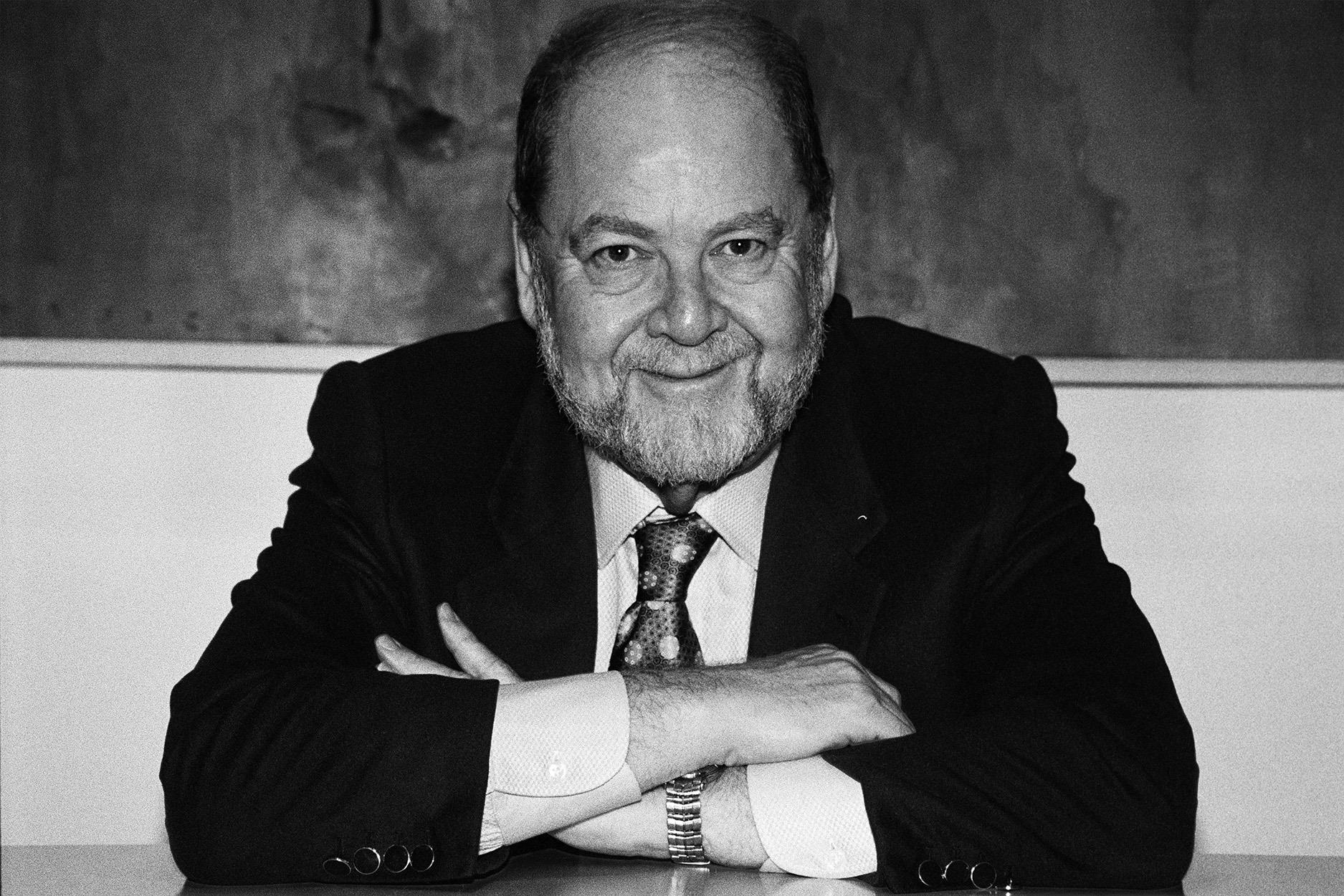
James E. Rothman, the Sterling Professor of Cell Biology at Yale University, is one of the world's most distinguished biochemists and cell biologists. He is the Director and founder of the Nanobiology Institute on Yale’s West Campus and the former Chair of the Department of Cell Biology (2008-2023). He was born in Haverhill, Massachusetts (1950) where he attended public elementary schools, graduating from Pomfret School (1967) and Yale College (1971) where he studied physics. He received his Ph.D. degree in Biological Chemistry from Harvard (1976) with Eugene P. Kennedy, and was also an MD student at Harvard Medical School from 1971 to 1973. He then did postdoctoral research with Harvey F. Lodish (1976-1978) in the Department of Biology at the Massachusetts Institute of Technology. From 1978 to 1988, he was Assistant, Associate, and then Full Professor in the Department of Biochemistry at Stanford University. Dr. Rothman was the E.R. Squibb Professor of Molecular Biology at Princeton University (1988-1991). He then founded and chaired the Department of Cellular Biochemistry and Biophysics at Memorial Sloan-Kettering Cancer Center (1991-2004), where he held the Paul A. Marks Chair and served as Vice-Chairman of Sloan-Kettering. Prior to coming to Yale in 2008 to lead the Department of Cell Biology, Dr. Rothman was the Wu Professor of Chemical Biology in the Department of Physiology and Cellular Biophysics, and Director of Columbia University’s Sulzberger Genome Center.
Professor Rothman discovered key molecular machinery responsible for transfer of materials among compartments within cells, providing the conceptual framework for understanding such diverse and important processes as the release of insulin into the blood, communication between nerve cells in the brain, and the entry of viruses to infect cells. Numerous kinds of tiny membrane-enveloped vesicles ferry packets of enclosed cargo. Each type of vesicle must deliver its specialized cargo to the correct destination among the maze of distinct compartments that populate the cytoplasm of a complex animal cell. The delivery process, termed membrane fusion, is fundamental for physiology and medicine, as pathology in this process can cause metabolic, neuropsychiatric and other diseases. Rothman reconstituted vesicle budding and fusion in a cell-free system (1984) and discovered the complex of SNARE proteins (1993) which mediates membrane fusion and affords it specificity. He also uncovered the GTPase-switch mechanism which controls coated vesicle budding in the cell (1991).
Dr. Rothman has received numerous awards and honors in recognition of his work on vesicle trafficking and membrane fusion, among them the King Faisal International Prize for Science (1996), the Gairdner Foundation International Award (1996), the Lounsbery Award of the National Academy of Sciences (1997), the Heineken Foundation Prize of the Netherlands Academy of Sciences (2000), the Louisa Gross Horwitz Prize of Columbia University (2002), the Lasker Basic Science Award (2002), the Kavli Prize in Neuroscience (2010), the Massry Prize (2010), the EB. Wilson Medal (2010) and the Nobel Prize in Physiology or Medicine (2013). He is a member of the US National Academy of Sciences (1993) and the National Academy of Medicine (1995), and a Fellow of the American Academy of Arts and Sciences (1994). Rothman was awarded the rank of Officier de la Légion d’honneur of France (2014) and was elected Foreign Member of the Royal Society of London (2019).